Why Body Recomposition Is the Hardest Problem in Training Research

The compounds in the cut-and-lean category are studied for their ability to shift body composition by preserving or building lean tissue, promoting fat oxidation, improving metabolic efficiency, and supporting performance during a caloric deficit.

The central challenge in any cutting protocol is the same: maintaining muscle mass while reducing body fat. The compounds in this category address that problem from different mechanistic angles.

Compounds in This Category

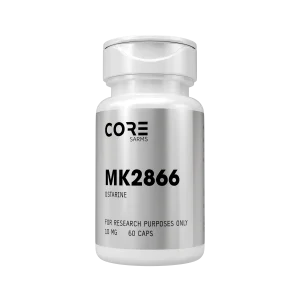
Ostarine (MK-2866)

The most clinically researched compound in this range. A Phase 2 trial published in The Lancet Oncology found statistically significant retention of lean body mass in cancer patients with muscle wasting compared with placebo, establishing its anti-catabolic properties in a controlled human setting. [1]

Key characteristics of Ostarine:

  • Mild side effect profile.
  • Effective across a wide range of dosing contexts.
  • Well-tolerated on cycles up to 12 weeks.
  • Does not aromatise.

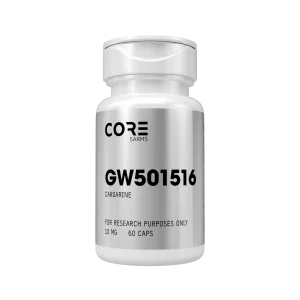
Cardarine (GW-501516)

Cardarine approaches body composition from the metabolic side, activating PPARdelta receptors to increase fat oxidation and shift muscle fibres toward an oxidative profile. A mouse study confirmed increased endurance and altered muscle fibre expression both with and without exercise. [2]

Important note: Cardarine is not a SARM and does not interact with androgen receptors. Its carcinogenicity findings in long-term animal studies are documented and should inform any research protocol.

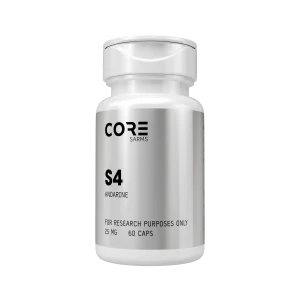
Andarine (S4)

Andarine adds a harder, leaner effect through direct AR activity, with preclinical evidence from an ovariectomised rat model supporting effects on bone mineral density and body fat reduction. [3]

Dose-dependent visual disturbances, including a yellow tint to vision and reduced dark adaptation, are a documented variable linked to off-target retinal AR binding and should be factored into any study design.

Quality Assurance

All compounds are independently lab-tested, batch-traceable, and supplied with certificates of analysis. Sold strictly for research purposes. Not approved for human use.

Want to read more? Check out The Ultimate Cutting Stack: SARMs for Fat Loss.

Sources:

[1] Dobs, A. S., Boccia, R. V., Croot, C. C., et al. (2013). Effects of enobosarm on muscle wasting and physical function in patients with cancer: a double-blind, randomised controlled phase 2 trial. The Lancet Oncology, 14(4), 335-345. https://doi.org/10.1016/S1470-2045(13)70055-X

[2] Chen, W., Gao, R., Xie, X., et al. (2015). A metabolomic study of the PPARdelta agonist GW501516 for enhancing running endurance in Kunming mice. Scientific Reports, 5, 9884. https://doi.org/10.1038/srep09884

[3] Kearbey, J. D., Gao, W., Narayanan, R., et al. (2007). Selective Androgen Receptor Modulator (SARM) treatment prevents bone loss and reduces body fat in ovariectomized rats. Pharmaceutical Research, 24(2), 328-335. https://doi.org/10.1007/s11095-006-9152-9

Frequently Asked Questions

Researchers investigate these compounds for their potential to preserve lean tissue during caloric deficits. Studies primarily focus on how androgen receptor modulators might influence metabolism and prevent muscle wasting.

Thermogenics typically stimulate the central nervous system to increase energy expenditure, while these compounds are studied for their targeted cellular interactions. This means that researchers primarily observe their effects on muscle and bone tissue without causing the systemic stimulation associated with traditional fat burners.

Why is compound purity so important?

Warenkorb (0)
Schließen
cart-no-product
Noch nichts hier!

Sie haben noch keine Artikel hinzugefügt. Starten Sie jetzt Ihren Einkauf.

Jetzt einkaufen